
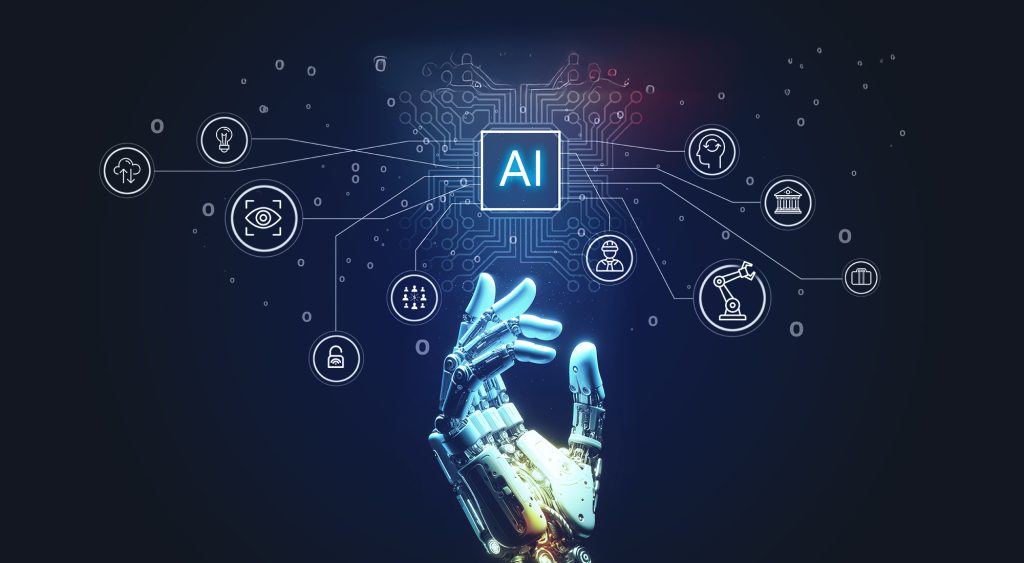
Artificial Intelligence, often called AI, is no longer just a futuristic idea—it’s already part of our everyday lives. From voice assistants like Siri and Alexa to self-driving cars and advanced medical tools, AI is transforming how we live, work, and interact. It is not only a technological advancement but also a revolution that is changing industries, economies, and societies worldwide.
What is Artificial Intelligence?
Artificial Intelligence is the ability of machines to perform tasks that usually require human intelligence—such as problem-solving, decision-making, learning, and understanding language. Unlike traditional computers that only follow pre-set rules, AI can learn from data, adapt, and improve over time.
Types of AI
AI can be broadly divided into the following categories:
Often discussed in science fiction but also a subject of serious research and debate.
Narrow AI (Weak AI)
Designed to perform specific tasks (e.g., Google Maps, spam filters, chatbots).
Most of today’s AI belongs to this category.
General AI (Strong AI)
Machines that can think, learn, and perform any intellectual task like a human.
Still theoretical but the ultimate goal of AI research.
Superintelligent AI
Often discussed in science fiction but also a subject of serious research and debate.
A future concept where AI surpasses human intelligence.
Applications of AI in Everyday Life and Business
- Healthcare – AI assists in early disease detection, robotic surgeries, and drug development.
- Education – Personalized learning apps, virtual tutors, and smart classrooms.
- Finance – Fraud detection, algorithmic trading, and automated customer service.
- Retail & E-commerce – Personalized recommendations (like Amazon), chatbots, and inventory management.
- Transportation – Self-driving cars, route optimization, and predictive maintenance.
- Entertainment – Streaming platforms (Netflix, YouTube) use AI to recommend movies and shows.
- Manufacturing – Smart factories, automation, and predictive quality control.
Benefits of AI
- Efficiency & Automation – Speeds up tasks and reduces human effort.
- Accuracy – Minimizes human error in fields like healthcare and finance.
- Cost-Effective – Saves money in the long run through automation.
- 24/7 Availability – Chatbots and AI systems work without breaks.
- Better Decision-Making – Data-driven insights for smarter strategies.
Challenges and Risks of AI
- Job Loss – Automation may replace certain human jobs.
- Bias in AI – AI can inherit unfair biases from data.
- Privacy Issues – Collection of personal data raises security concerns.
- Ethical Questions – How much control should machines have?
- Overdependence – Relying too heavily on AI may reduce human creativity and critical thinking.
The Future of AI
The future of AI looks exciting and full of possibilities:
- AI-powered healthcare that can predict diseases even before symptoms appear.
- Fully autonomous vehicles making transportation safer and faster.
- Smarter cities with AI managing traffic, energy, and public services.
- Human-AI collaboration where machines handle repetitive work while humans focus on creativity and innovation.
However, with great power comes great responsibility. Governments, businesses, and researchers must ensure that AI is developed ethically, transparently, and safely.
Conclusion
Artificial Intelligence is not just a technology—it’s a revolution shaping the future of humanity. It holds the power to improve lives, solve global challenges, and unlock endless opportunities. But it also requires careful regulation and ethical use. As AI continues to evolve, the way we balance innovation with responsibility will define its true impact on our world.
The future is AI-driven, and the time to adapt is now.